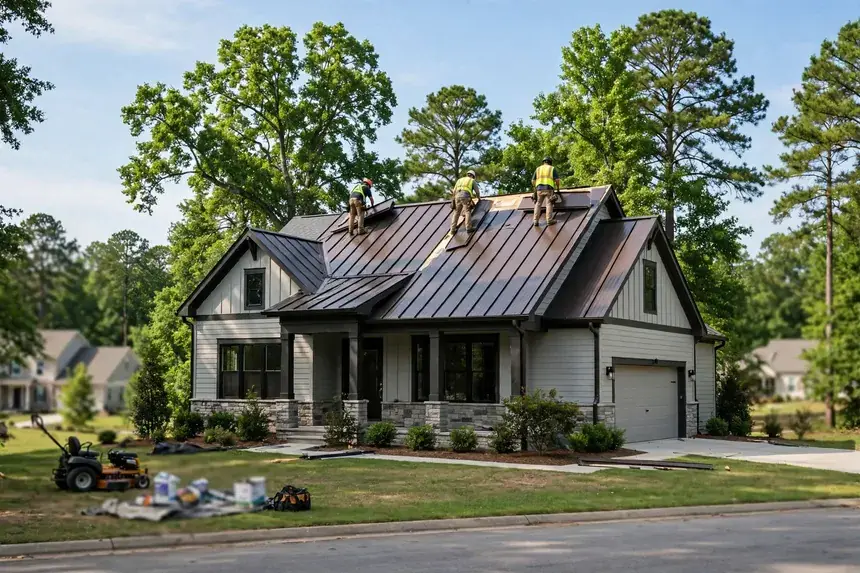
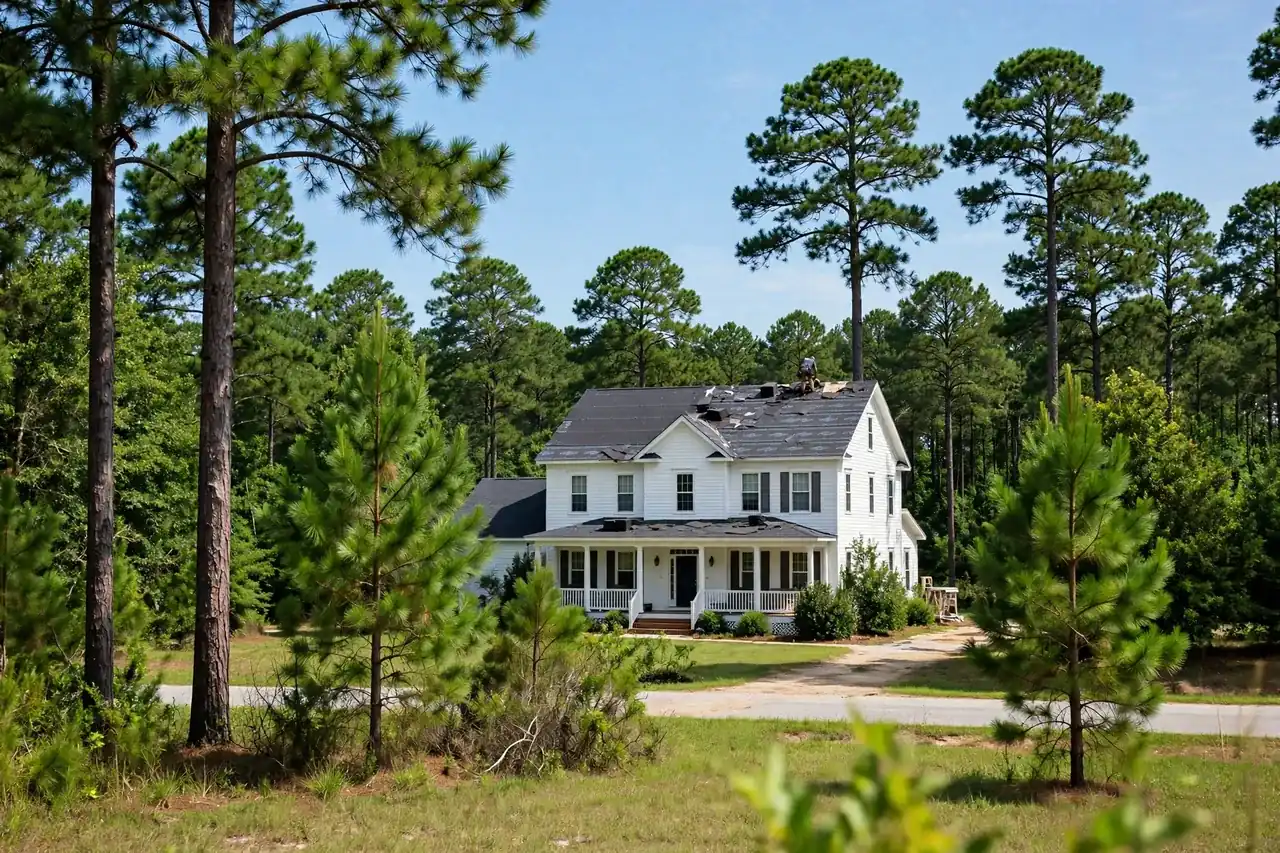
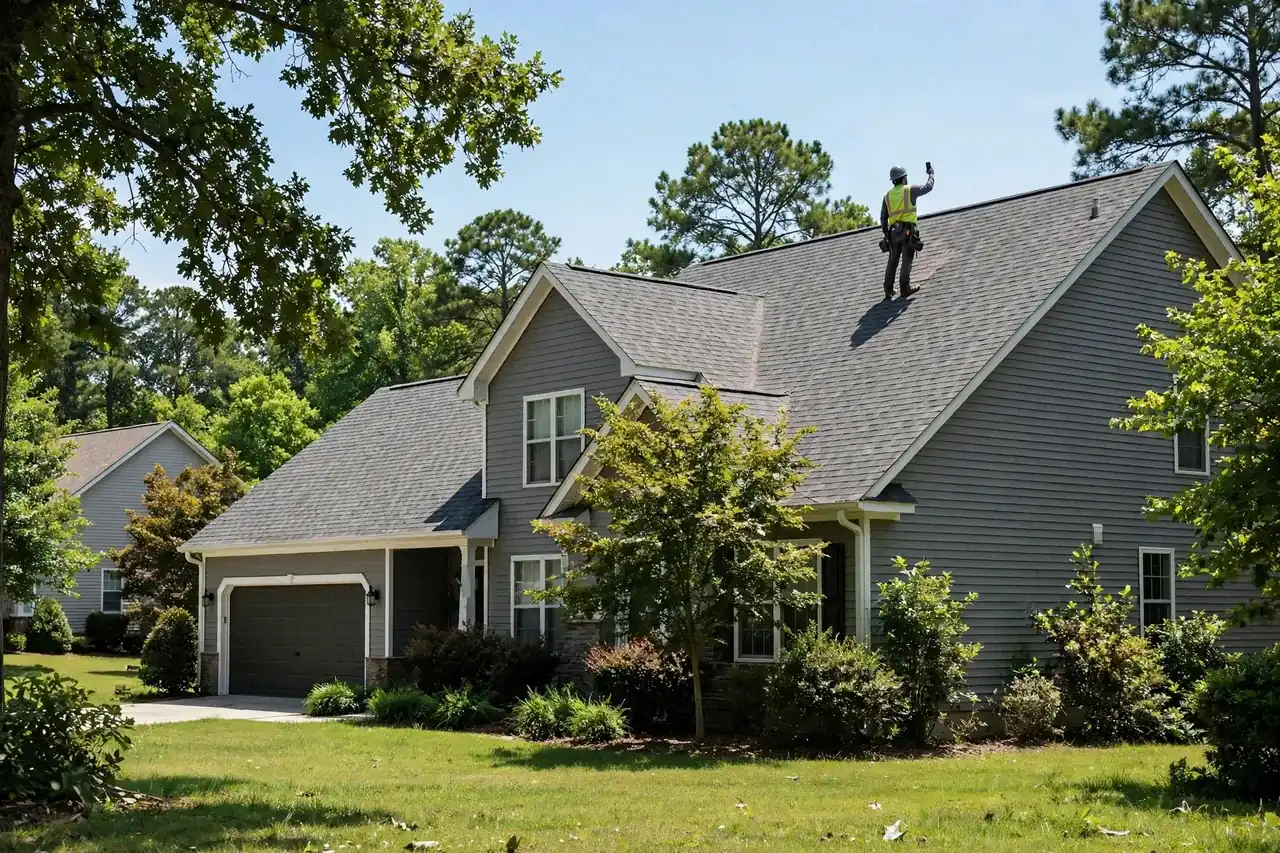
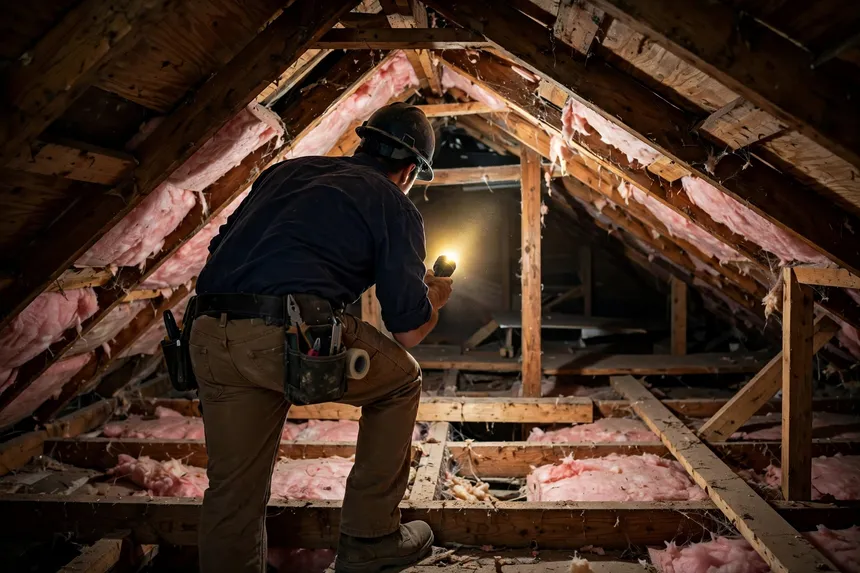
For commercial roofing Douglasville GA, Finnegan Services LLC provides commercial roofing for property managers, HOA communities and small commercial owners. The buyer here is different from a homeowner: the scope is a budgeting and documentation document, with drainage, penetrations, access and phasing recorded, not just a material choice. Georgia issues no state roofing licence (O.C.G.A. § 43-41-17 exemption); a state contractor licence is required only over $2,500 or beyond the roofing specialty. See what to check before hiring a roofer.
A commercial scope covers assessment, membrane and insulation, flashing and drainage, and handover, with anything beyond it priced separately.
Roof assessment and photos
Roof assessment and photos, including moisture scan, ponding, seam, flashing, drain and penetration findings, so the scope rests on evidence, not on a membrane preference.
Membrane and insulation
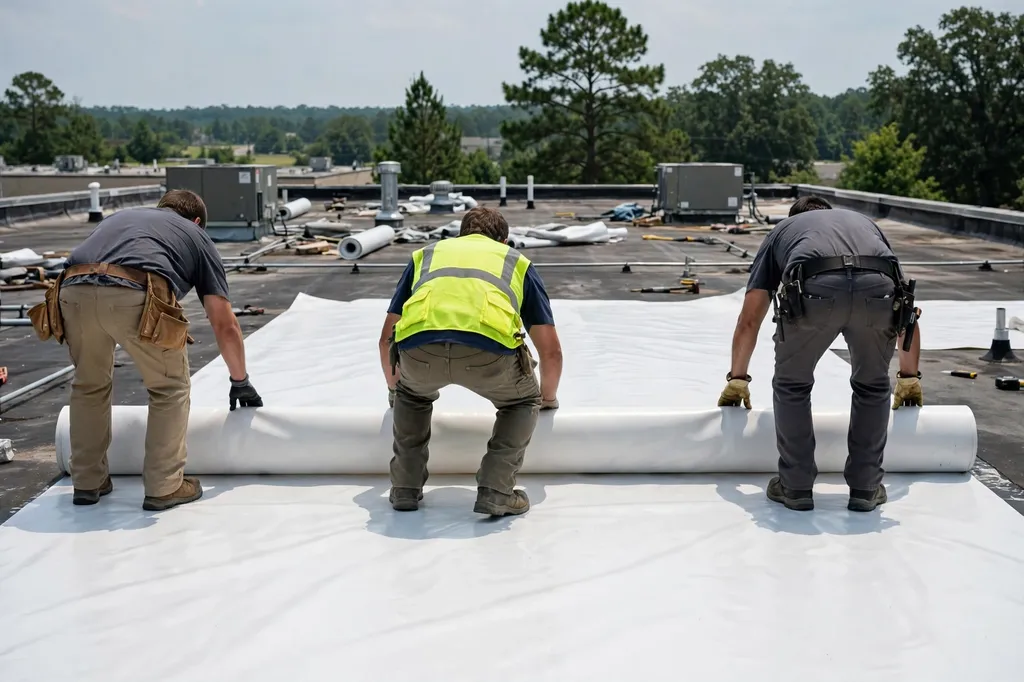
Membrane and insulation in the specified system, with wet or compressed insulation replaced and tapered insulation where drainage needs correcting, priced by measured roof area.
Flashing and edge metal
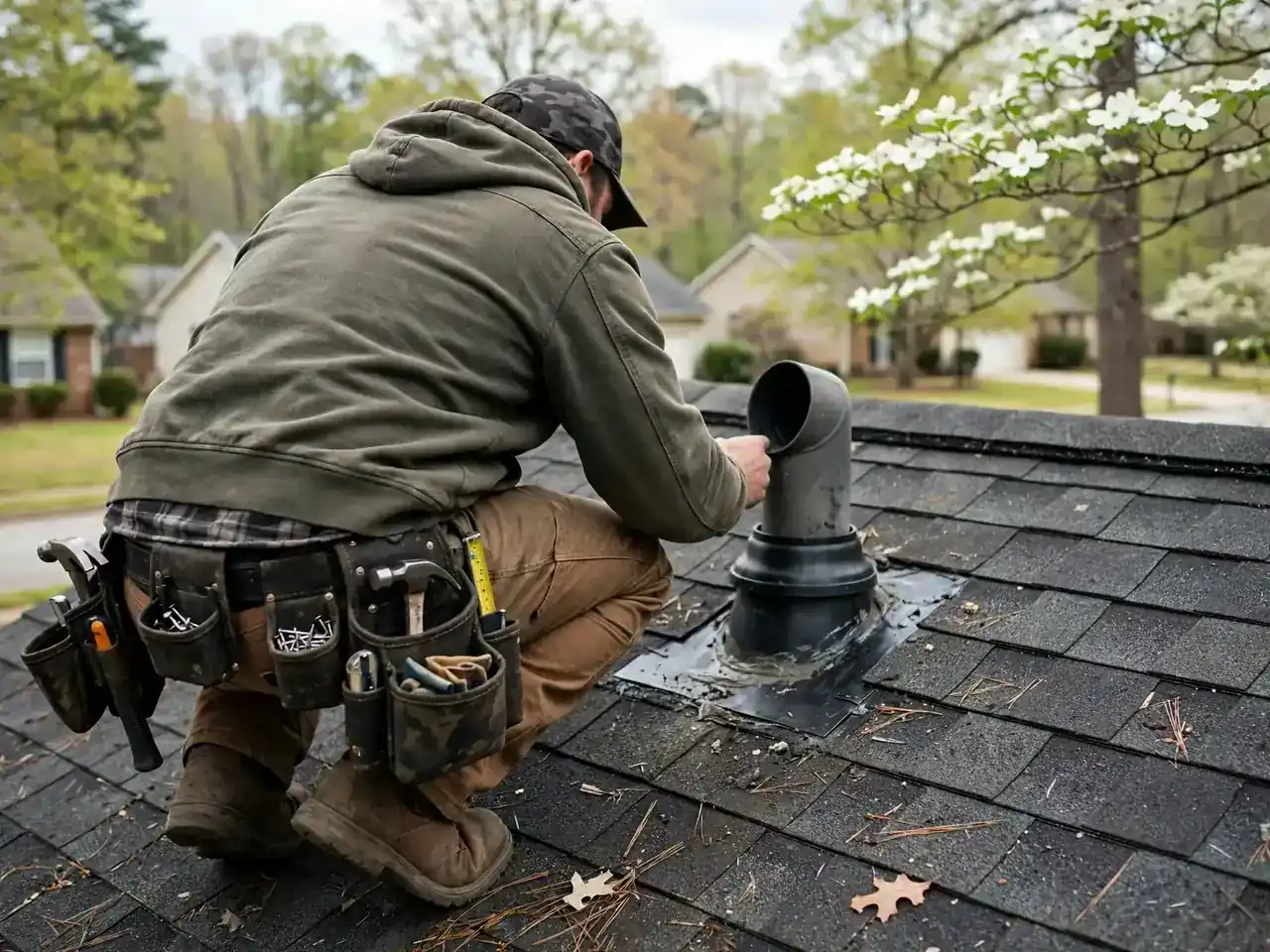
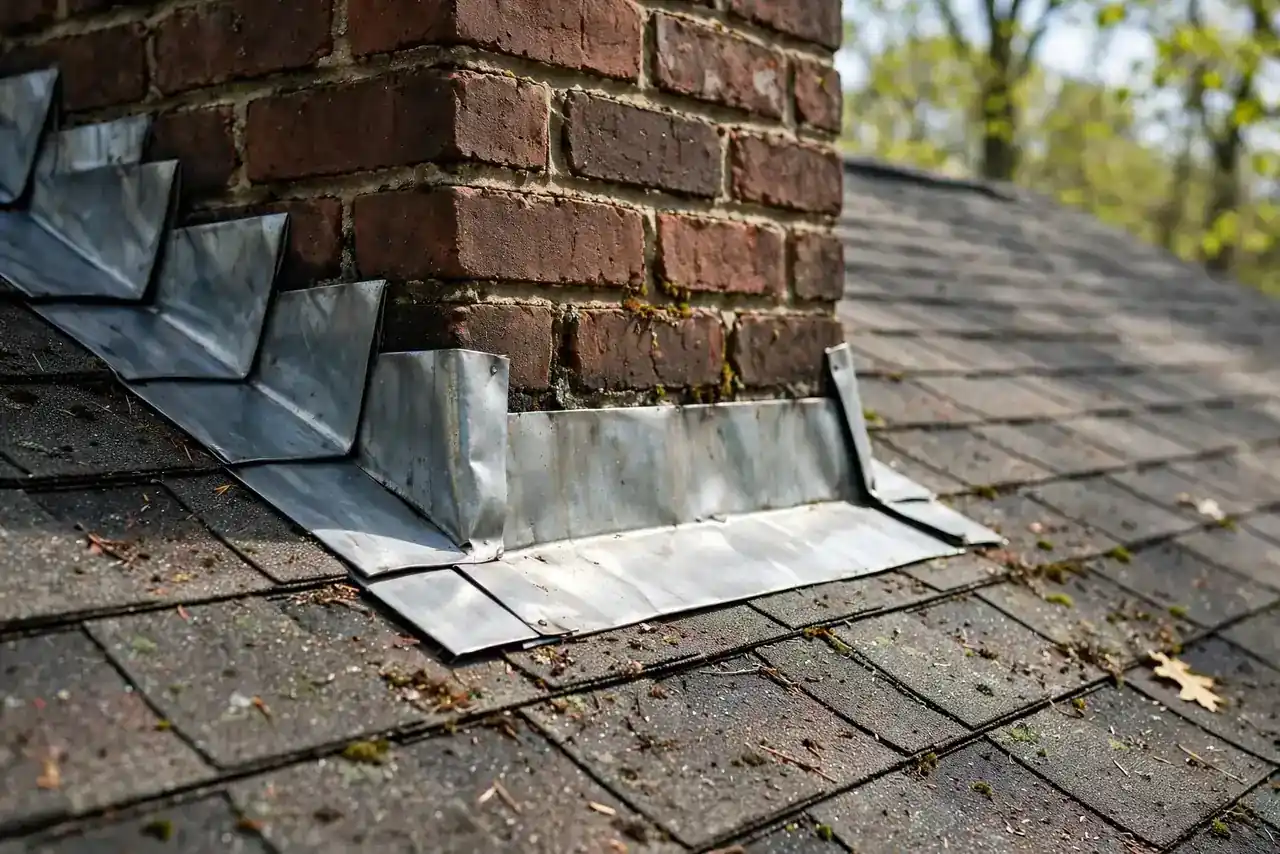
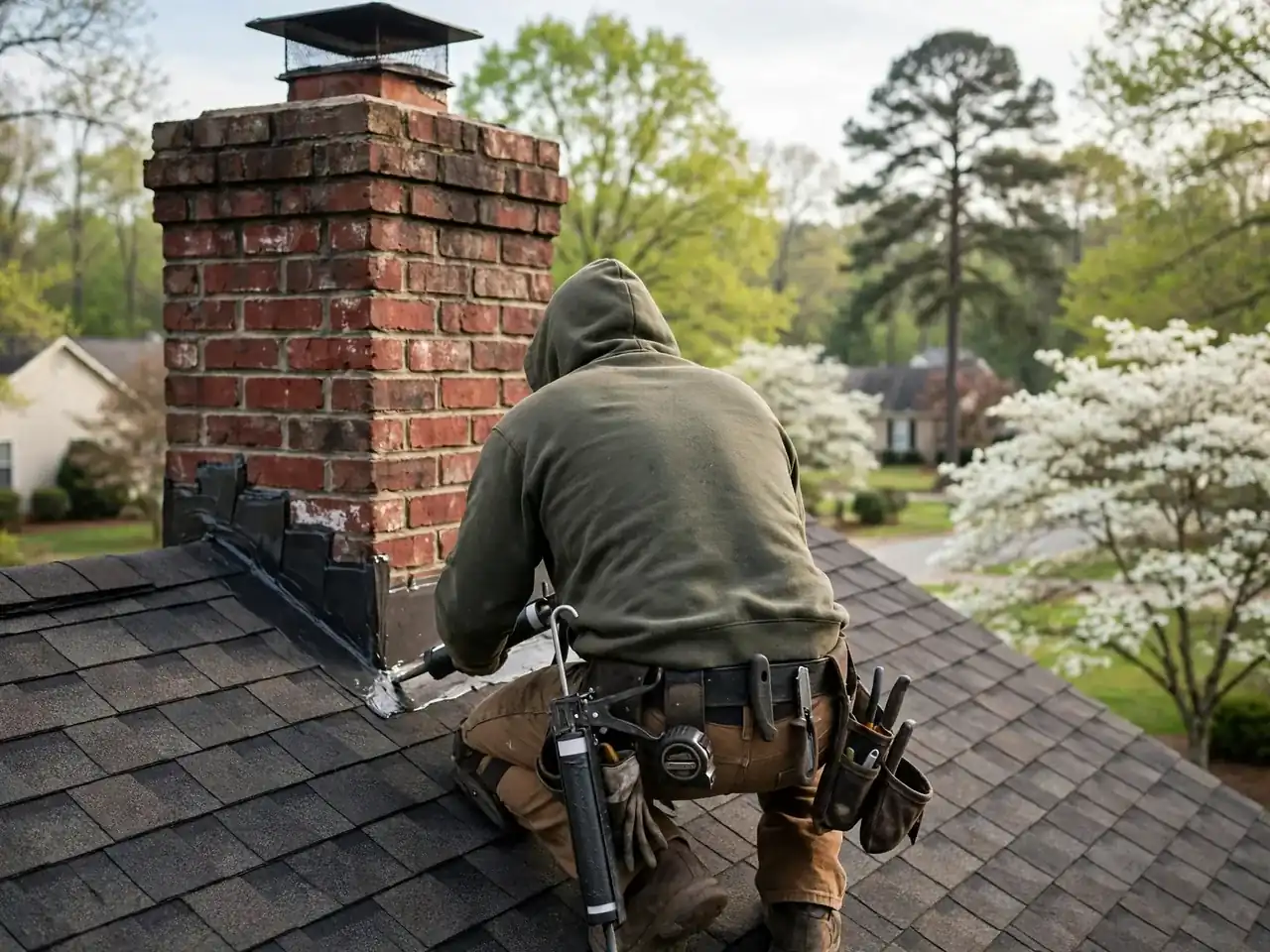
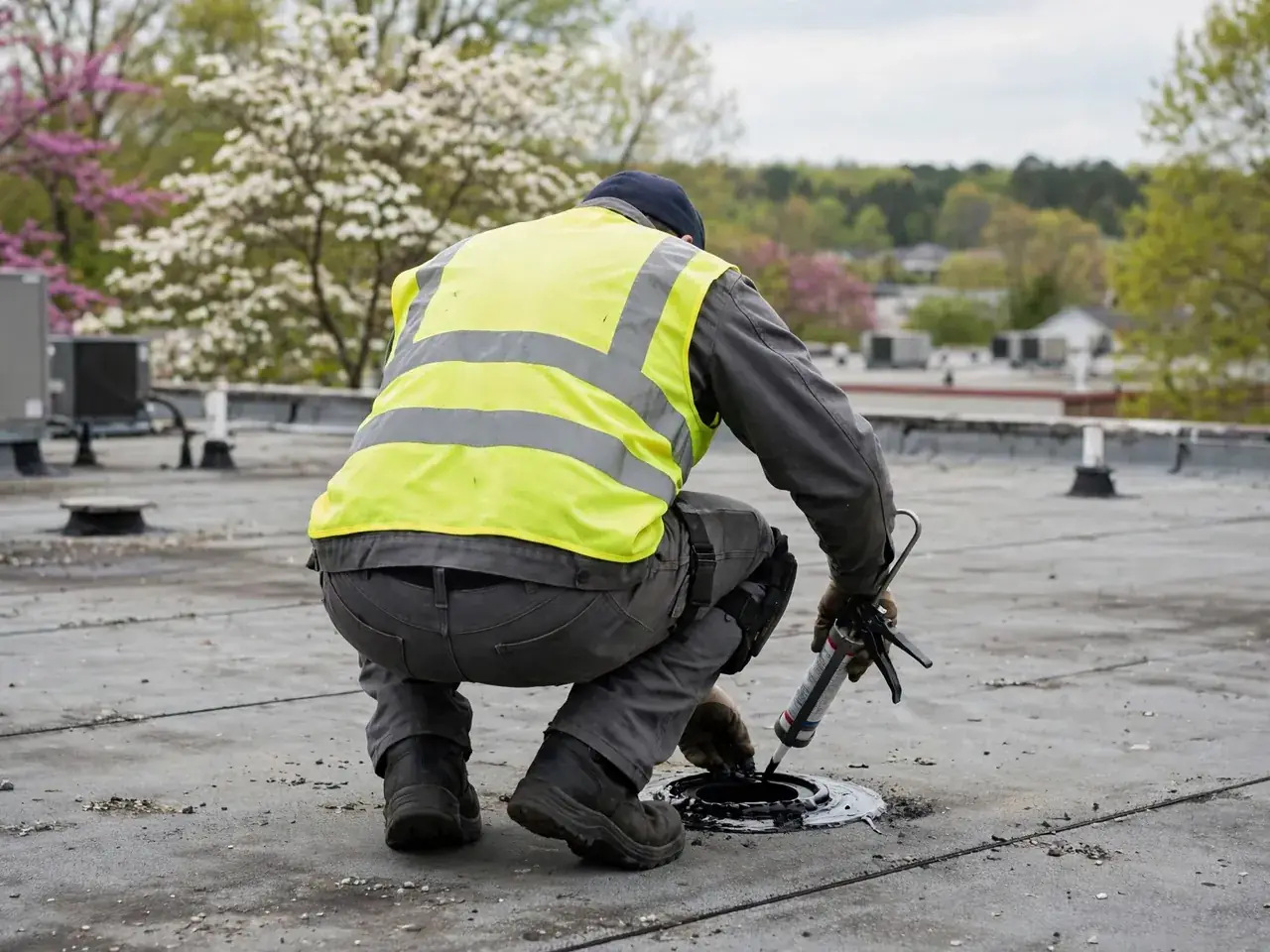
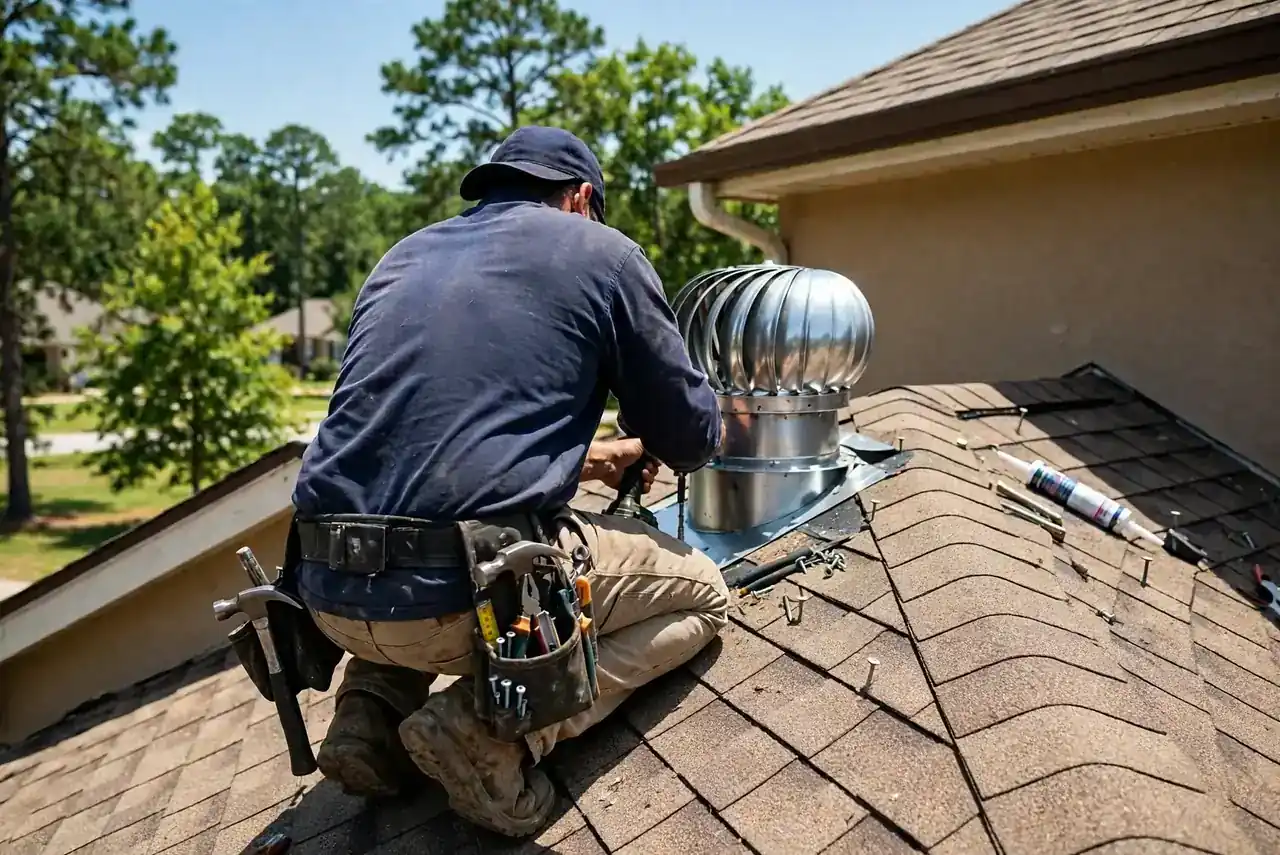
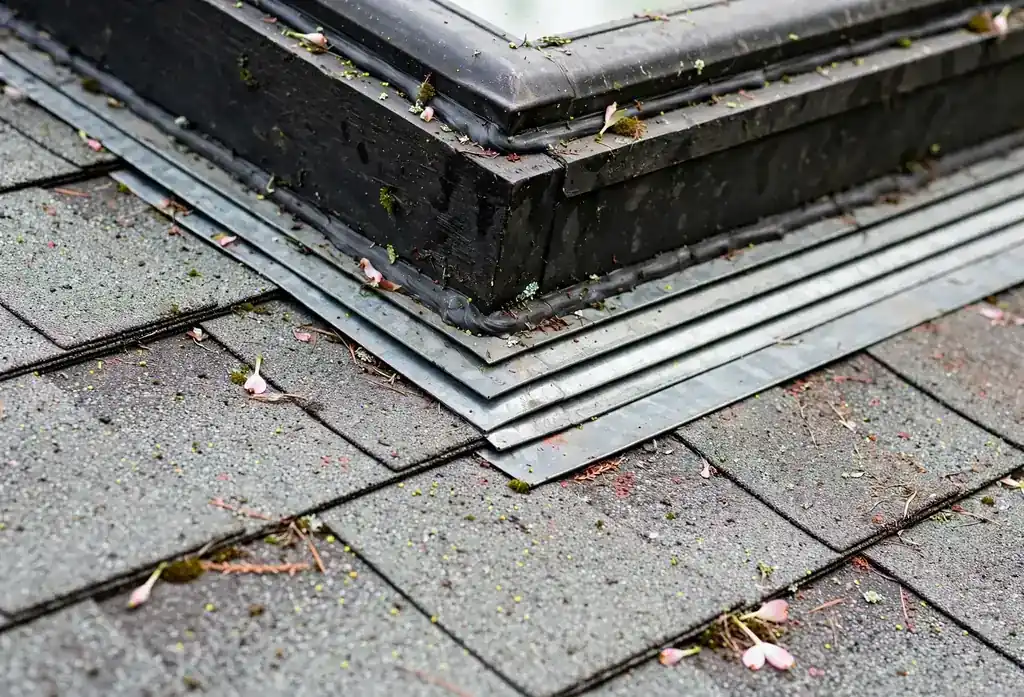
Flashing and edge metal at walls, curbs, drains, vents and rooftop gear, with new metal where old flashing has failed, and self-adhered membrane at penetrations only as an optional upgrade, never as code.
Drainage corrections
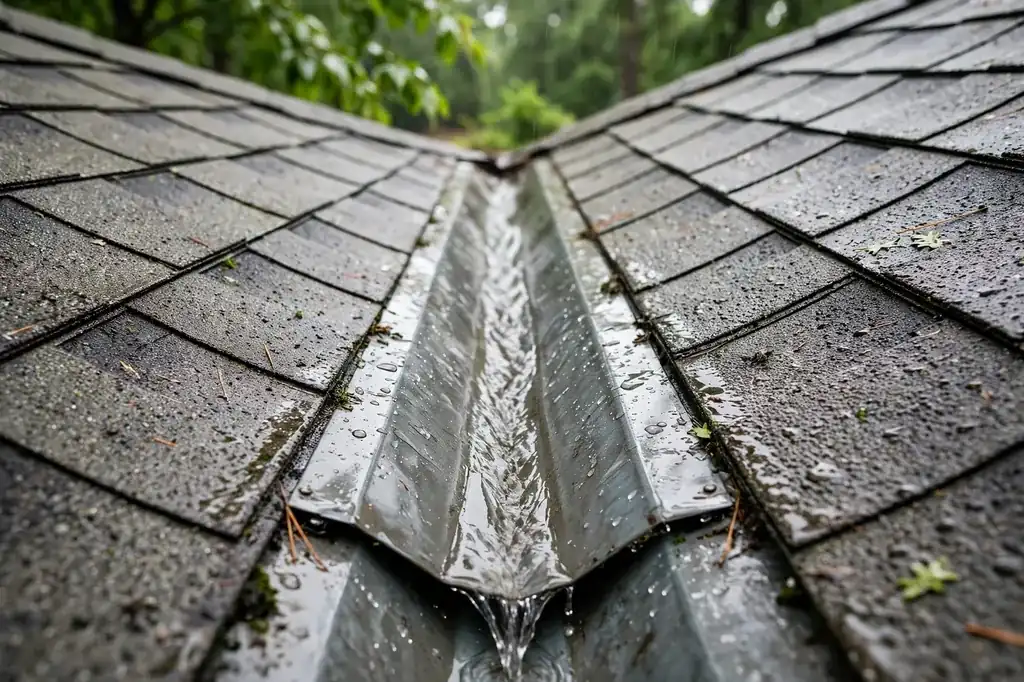
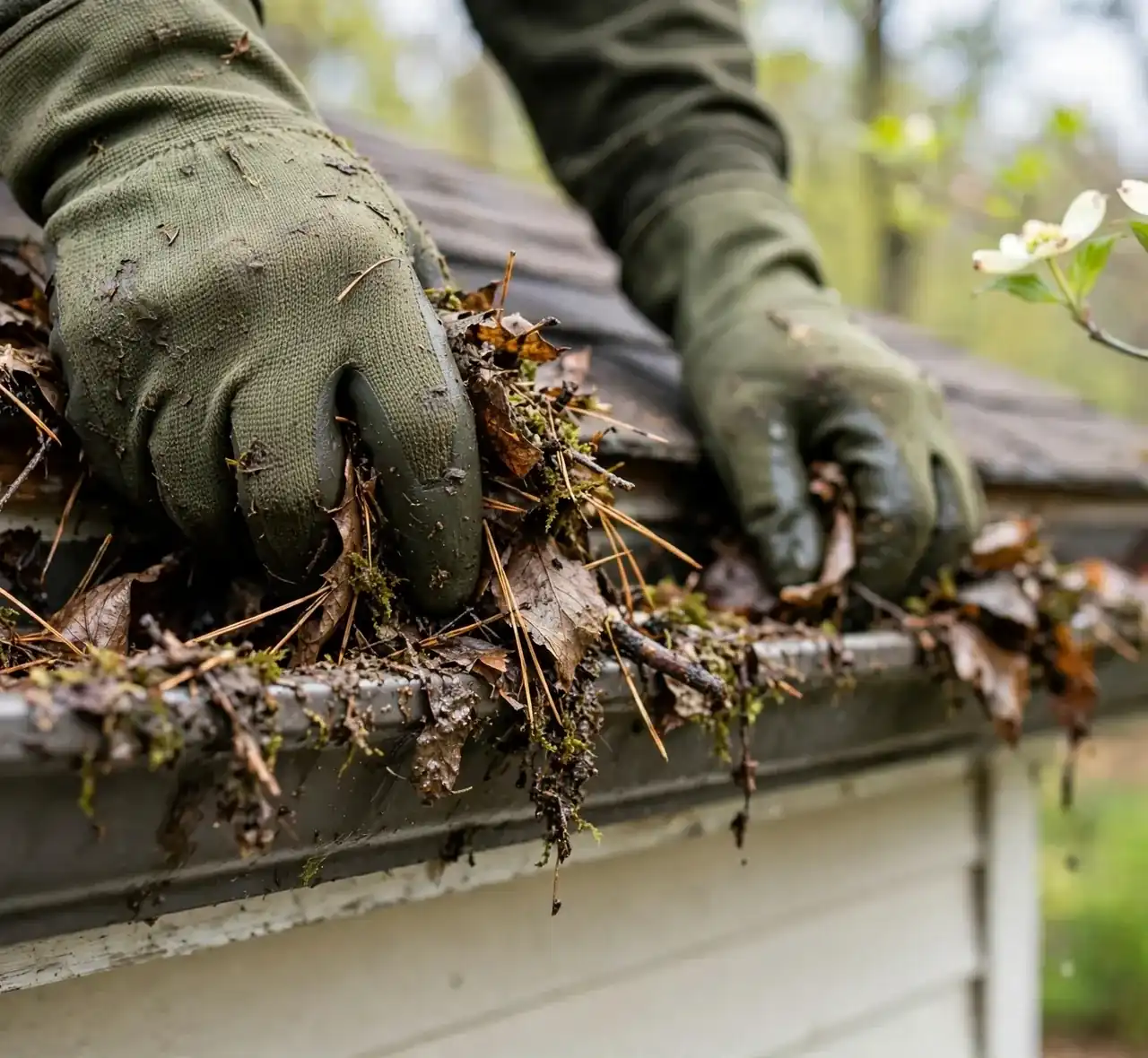
Drainage corrections, including drain, scupper and gutter clearing, crickets and tapered insulation, because ponding is a drainage problem first and a membrane problem second.
Debris removal and cleanup
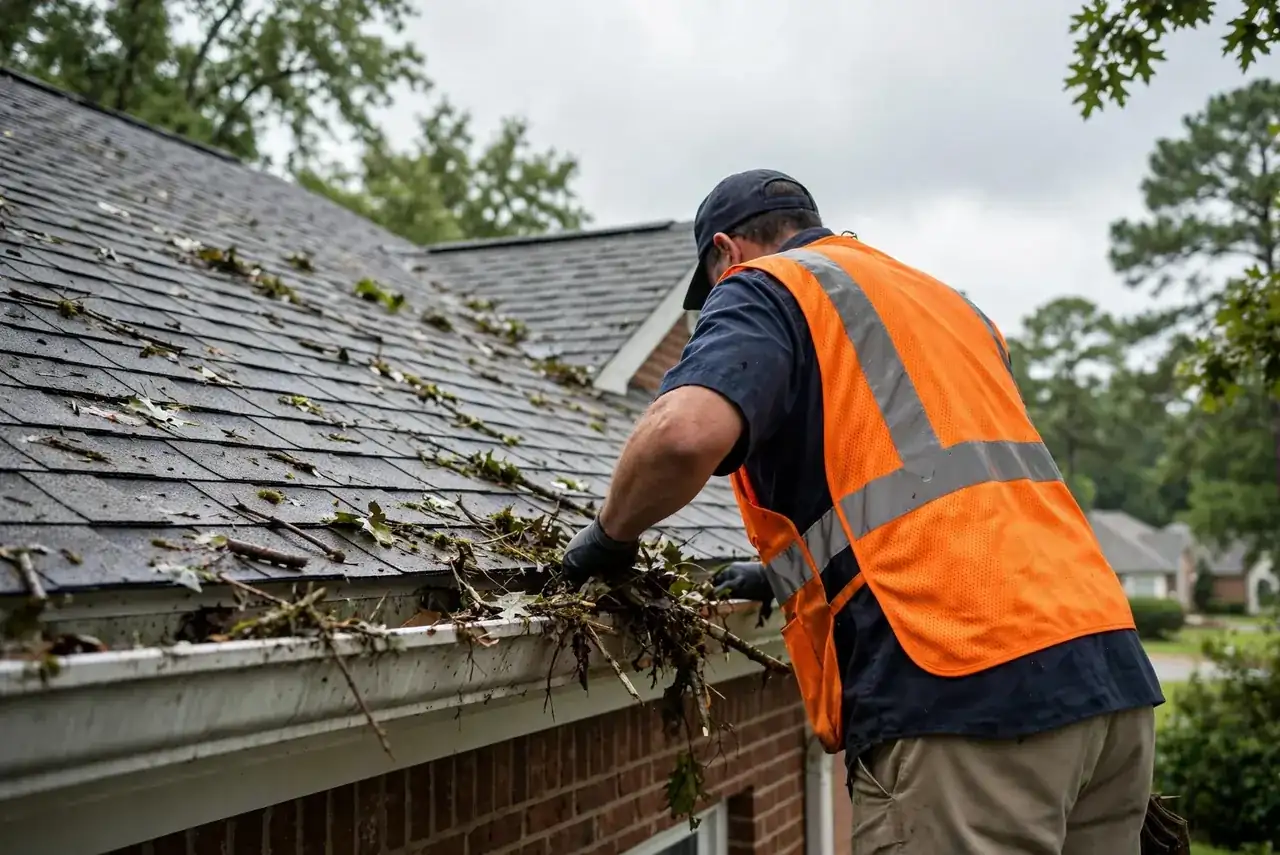
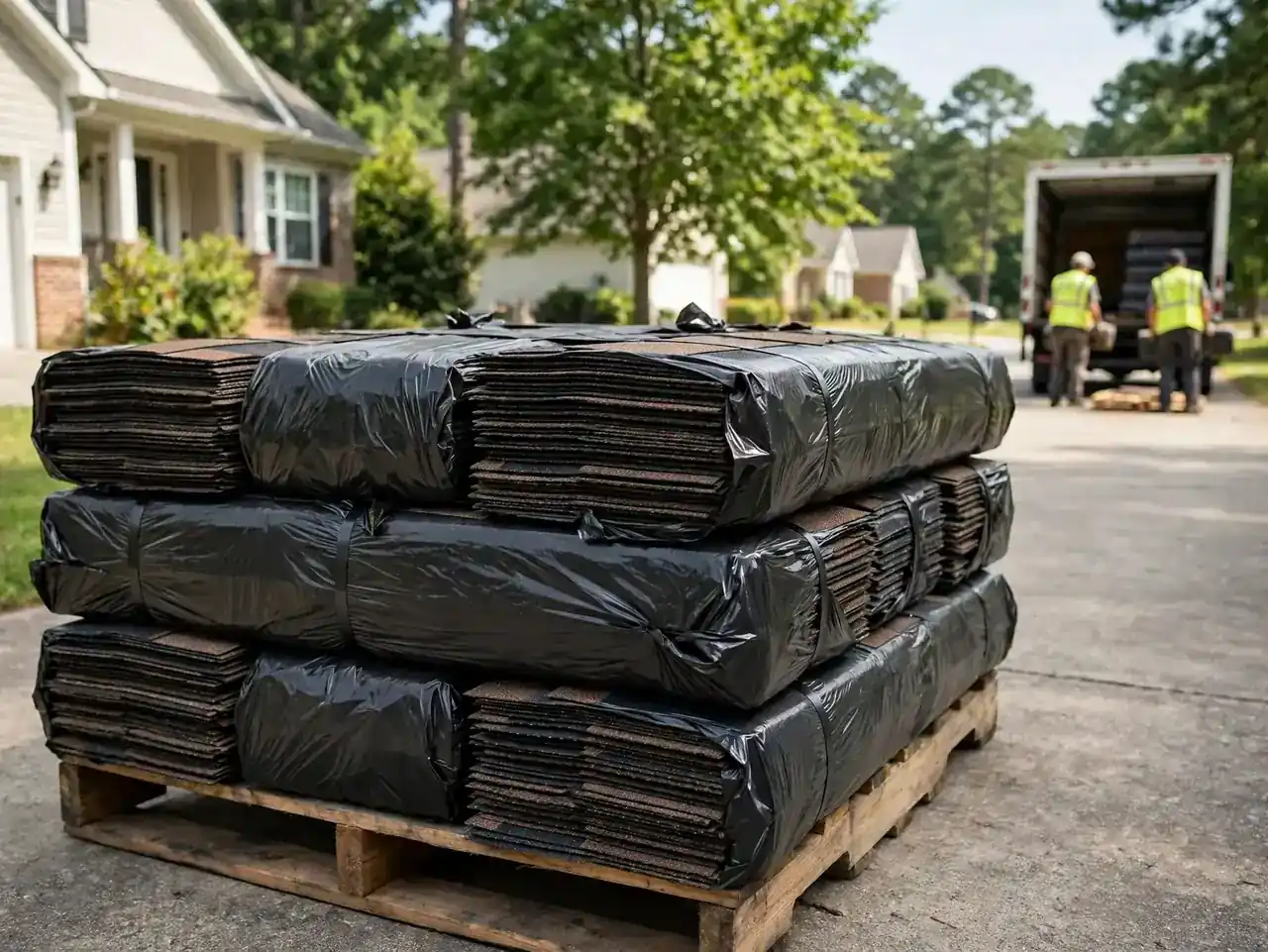
Debris removal and cleanup, with magnet sweep, gutter check and a photo log of the membrane, seams, flashing and drainage details.
Written Scope and Final Walkthrough
Homes and businesses.
The approach is the same for a home and a business; access, schedule and paperwork are what change.
For homes
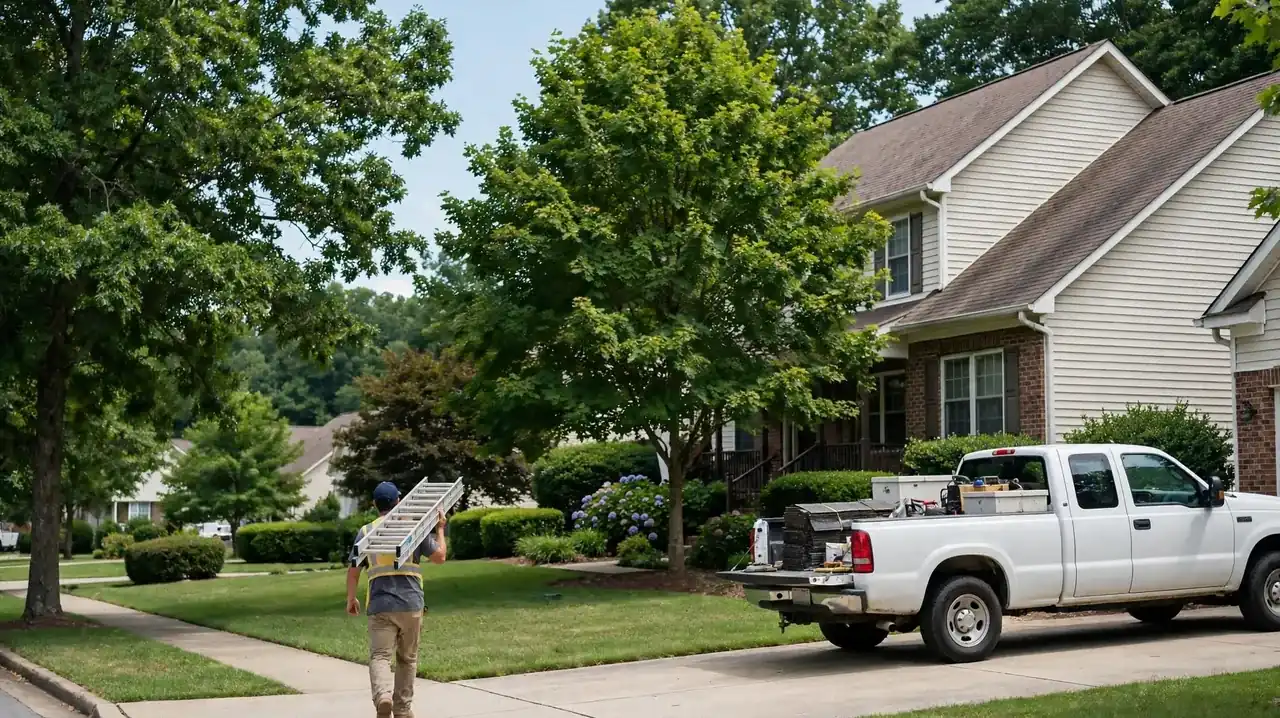
For homes near commercial corridors, the scope covers the residential roof with the same written scope and photo log, and notes any shared-roof or HOA submittal need where a townhome or community roof is involved.
Low-slope garage roof
Addition with flat section
Storm damage on outbuilding
For businesses
For businesses, the scope is phased around operations, with drainage, penetrations, rooftop gear and access planned first, and a photo file and maintenance history kept for owners, managers and HOA boards.
Tenant leak complaints
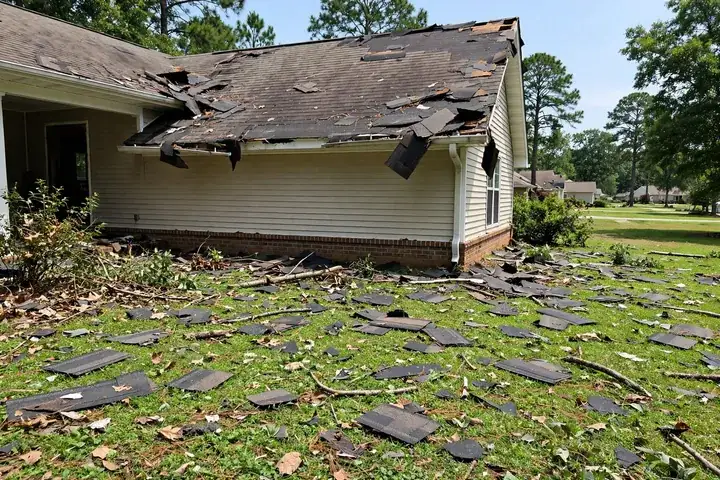
Post-storm tarp and report
Annual maintenance program
What Commercial Roofing in Douglasville actually involves
A buyer page for property managers, HOAs and small commercial owners.
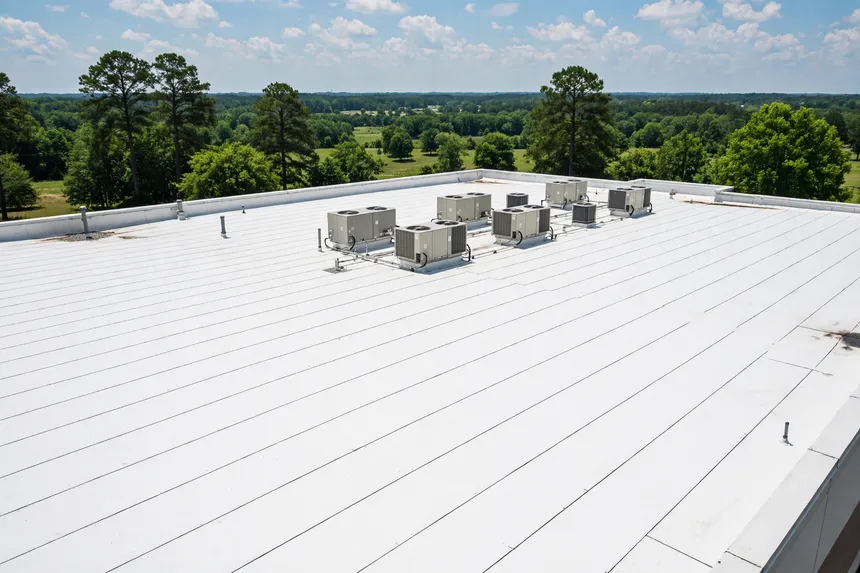
Commercial roofing in Douglasville, GA covers low-slope TPO, EPDM and modified-bitumen systems, standing-seam metal on pitched commercial roofs, and the drainage, insulation and penetration details that decide their life. A restaurant with grease exhaust needs a different membrane specification from a self-storage facility, and the scope is written by foot traffic, HVAC layout, drain plan and planned hold period, not by a single membrane per square foot. Douglasville's city market is 48.3% owner-occupied, so a large share of commercial and rental roof decisions run through landlords and managers, and the paperwork is written to be shared.
The Douglas Blvd and Arbor Place corridor, with Arbor Place Mall as the commercial anchor, is the mixed residential and commercial heart of the market, and downtown commercial buildings may need a Certificate of Appropriateness before a major material change, with major COA fees at $100 and after-the-fact fees at $500 in the 2026 checklist. That check comes before quoting, not after work starts. Related services: flat roofing, metal roofing, roof maintenance. Local pages: Arbor Place and Lithia Springs.
A commercial roof is a system, not a sheet of material.
What it is
Flat and low-slope roof systems installed on commercial buildings: membrane, insulation, flashing, and drainage.
When you need it
When you have leaks, ponding water, storm damage, or a roof past 15 years old.
What to expect
A roof walk, photos, a written scope, and a scheduled install window that works around your business.
How our commercial roof projects run
How a commercial project runs, from assessment to handover.
Roof assessment
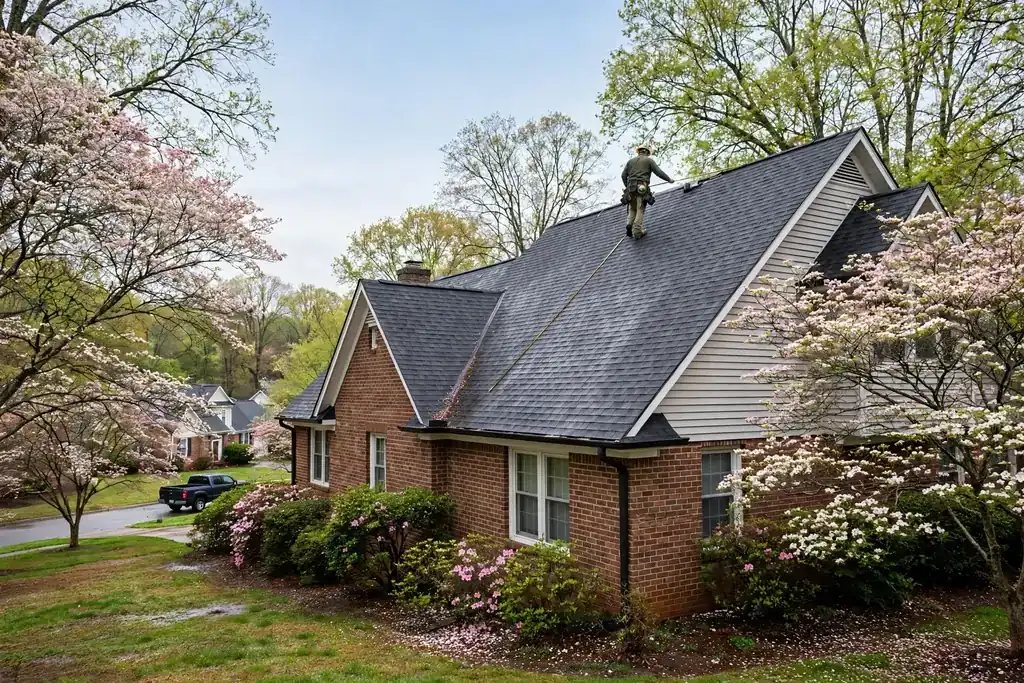
Roof assessment walks the roof, scans for moisture, checks drainage, penetrations and rooftop gear, and photographs each finding, with access and operating-hours constraints recorded.
Roof walk
Core sample
Photos
Written scope
A written scope records the membrane system, insulation, drainage corrections, penetration work and phasing, priced by measured roof area, with the drivers listed, not lumped.
Staging
Protection
Schedule
Scheduling and prep
Scheduling and prep phases work around operations, stages materials, and confirms any historic-district or HOA submittal before work is quoted or started.
Tear-off
Install
Flashing
Installation
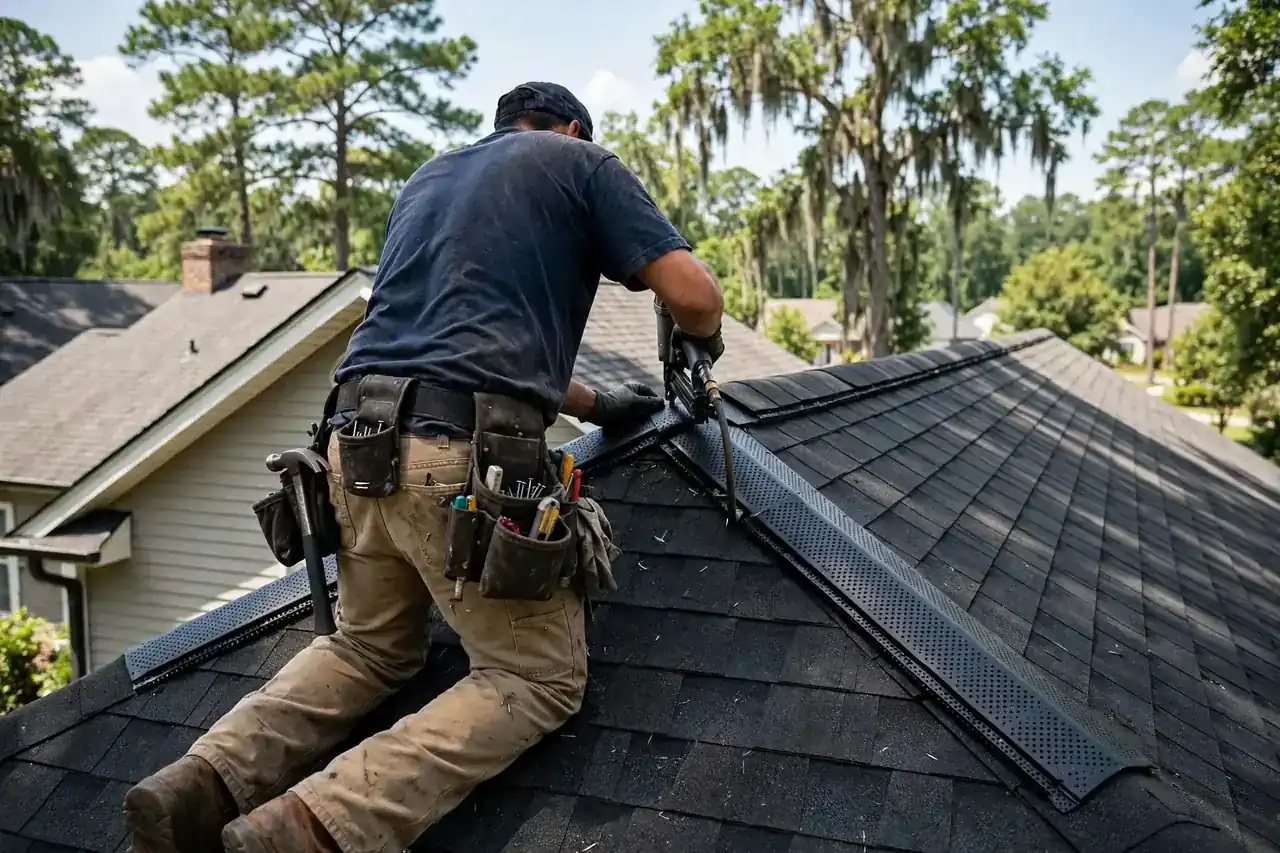
Installation lays insulation, membrane, seams, flashing and drainage details in sequence, with penetrations and rooftop gear coordinated, not added afterwards.
Walk
Hose test
Handoff
Final walk and handoff
Final walk and handover magnet-sweeps, clears drains and gutters, hauls debris, and walks the roof against the written scope and photo log, with a maintenance history handed over.
Tools and methods we bring to your roof
Move across a circle, or focus it and press Enter, for an illustrative thermal view of the photograph.
Infrared camera
Finds wet insulation under a dry membrane surface. On a large flat roof, it shows us exactly where water has traveled so we repair the right area.
Moisture meter
Confirms readings from the infrared scan and checks deck and insulation moisture at core samples. It tells us whether a section can be saved or needs replacement.
Roofing nail gun and shingle cutter
Used on shingle-roof commercial buildings and outbuildings.
Safety harness and roofing ladder
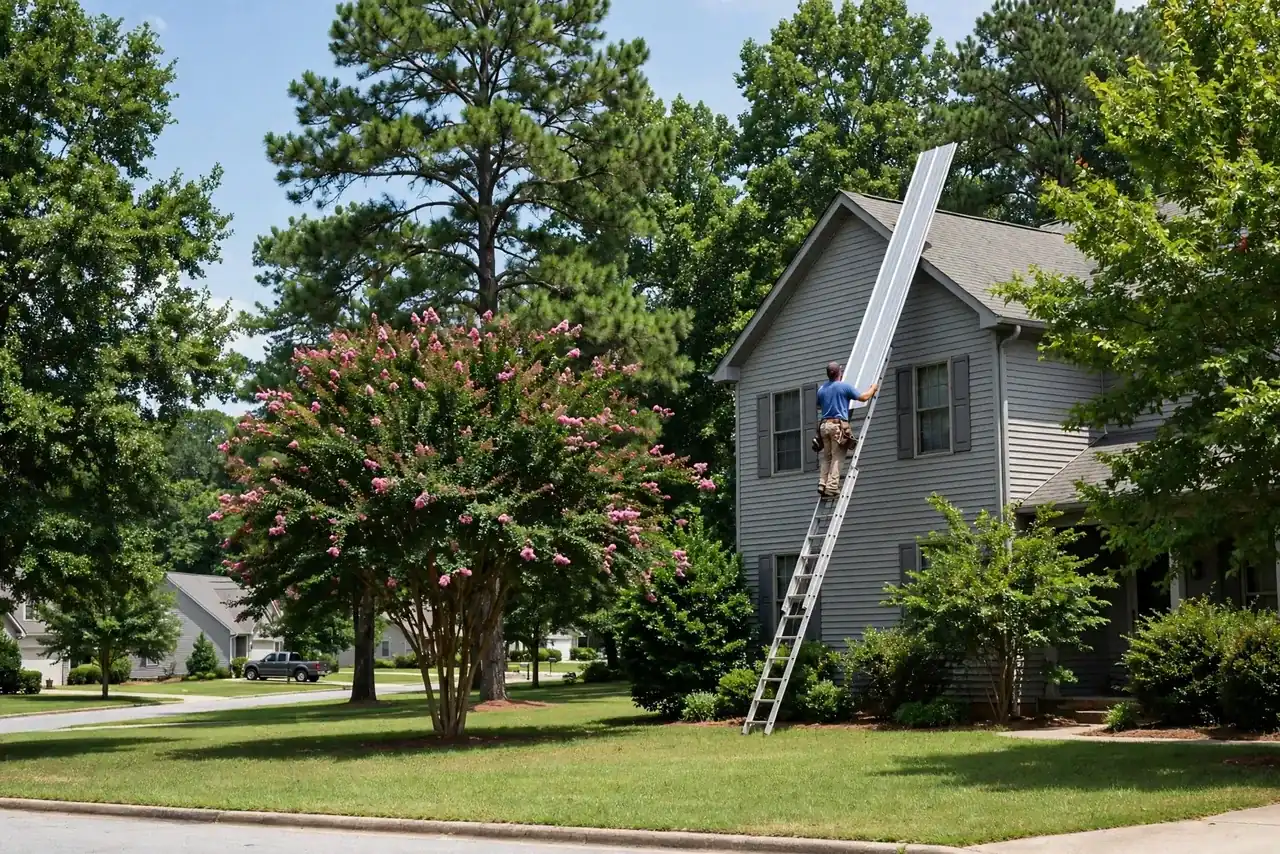
Every crew member is tied off on any roof with fall exposure. Ladders are set and secured before anyone steps onto the deck.
Leaf blower and magnet sweeper
Debris and fasteners get cleared from the roof and lot at the end of each work day. No screws left for your customers' tires.
Thermal views are illustrative, generated from the photographs.
Methods
Chalk line and pry bar
Layout for membrane runs and flashing, and controlled removal of old edge metal and terminations without damaging the deck.
Core sampling
We cut a small sample through the membrane and insulation to see the actual build-up and check for moisture. It is the only way to spec a replacement honestly instead of guessing from the surface.
Infrared moisture survey
A full-roof scan after sunset shows temperature differences where wet insulation sits. We mark the areas, verify with a meter, and scope repairs to the affected zones.
Manufacturer-spec fastening
Membrane attachment follows the published pattern for your system and wind zone.
Hose testing
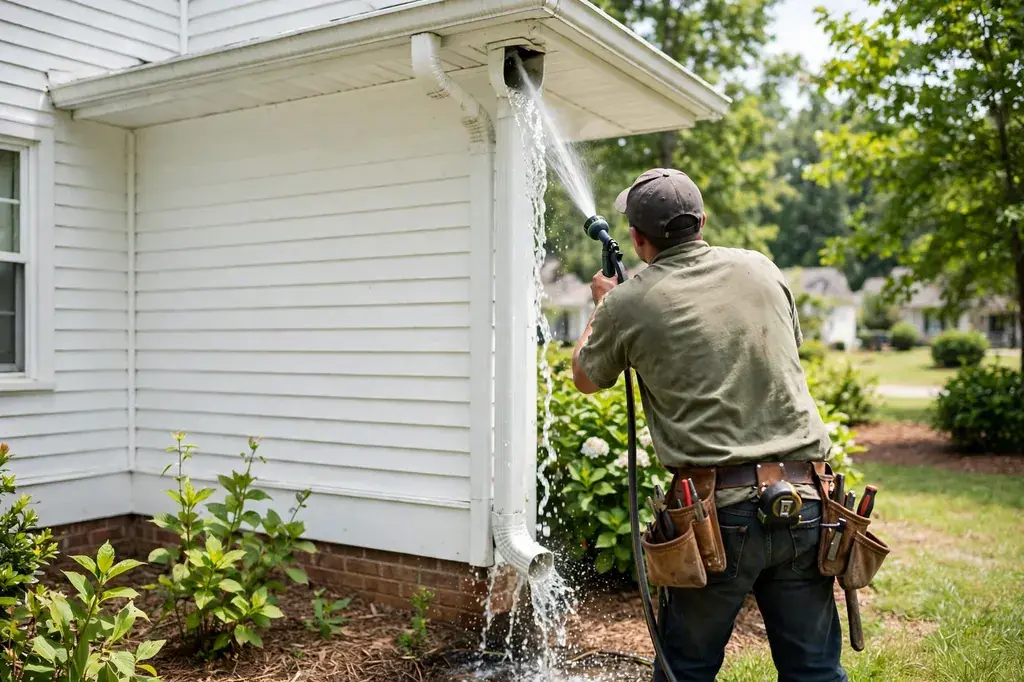
After flashing and seam repairs, we run water over the area and watch from inside or below. If it leaks, we have not finished.
When Douglasville buildings call us
Warehouse leak
A 15,000 square foot warehouse near Riverside has a ceiling stain spreading after every hard rain.
We assess the roof, trace the leak with a moisture meter, and repair the failed curb flashing. If the membrane has life left, we patch and reseal. If not, we quote a targeted section replacement.
Outcome: Leak stopped, tenant space dry, and a written condition report for the owner's capital budget.
Hail claim
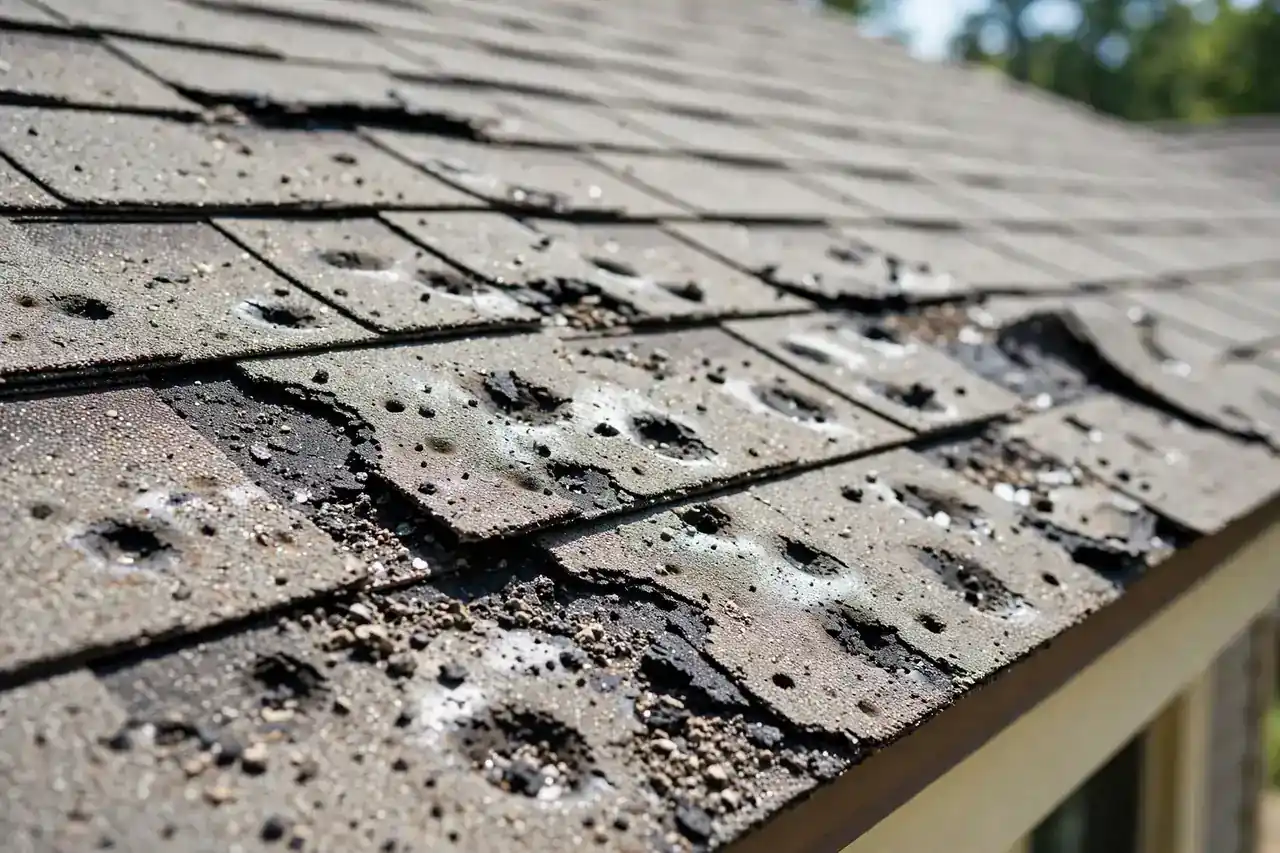
A retail strip on Highway 5 took hail in the spring and the owner needs documentation for an insurance claim.
We tarp any open areas, photograph and measure the hail bruising, core samples where needed, and write a scope that matches manufacturer repair standards.
Church ponding
A church in Downtown Douglasville has a 25-year-old flat roof that ponds water in two corners.
We survey the deck, add crickets and tapered insulation to move water to the drains, and install a new TPO membrane over the prepared surface.
Maintenance plan
A property manager in Lithia Springs wants to stop emergency calls and get ahead of roof problems.
We set up a twice-a-year maintenance program covering drain clearing, seam and flashing inspection, and fastener checks, with a photo report after each visit.
Outcome: Small repairs caught early, no emergency calls, and a documented roof history for ownership.
Coating project
An office building near Arbor Place has a 12-year-old EPDM roof that is sound but showing surface wear.
We clean and prep the membrane, apply a reflective coating system rated for Georgia UV, and document coating thickness at completion.
Outcome: Several more years of service at a fraction of replacement cost, plus reduced heat gain.
Downtown DouglasvilleRiversideChapel Hill
How commercial roofing runs in Douglasville
Commercial failures in Douglasville most often show as ponding, seam and flashing failure at penetrations, drainage blockage under tree canopy, and grease or rooftop-gear damage that a residential scope would miss. The scope therefore starts with assessment and photos, then membrane, insulation, drainage and penetration work, with maintenance scheduled spring and fall, because twice-a-year maintenance is what the research links to longer membrane life.
Permit requirements differ between City of Douglasville addresses and unincorporated Douglas County addresses, and are confirmed for your parcel before quoting; no permit fee or definitive trigger is published here. An ice barrier is not code-required in Douglasville: the IRC trigger is a January mean of 25°F or below, and Douglasville's January mean is about 42°F, so self-adhered membrane in valleys and at penetrations is offered only as an optional system upgrade, never as code. Georgia issues no state roofing licence (O.C.G.A. § 43-41-17 exemption); a state contractor licence is required only over $2,500 or beyond the roofing specialty. See what to check before hiring a roofer.
We handle both, and we document everything for your records.
Downtown Douglasville: Older brick commercial buildings with flat roofs and parapet walls. Flashing at the parapet is the most common leak point we find here.
Riverside: Industrial and warehouse buildings with large flat decks. Drainage and ponding are the recurring issues on these roofs.
Chapel Hill: Mix of retail strips and office buildings. Hail bruising on membrane shows up here after spring storms.
Lithia Springs: Larger commercial and light industrial properties. Roofs here benefit most from scheduled maintenance programs.
Highway 5: Retail and service buildings with a range of roof ages. Many are good candidates for coating instead of replacement.
Summer surface temperatures above 140 degrees: Dark membrane expands and contracts hard, stressing seams and flashing. We spec reflective TPO and check seam integrity on every maintenance visit.
IllustrativeThe thermal view is generated from the photograph. It is not a measurement. Drag the handle, or use the arrow keys once it is focused.
Warehouse leak traced and stopped
Before: A 15,000 square foot warehouse near Riverside had a ceiling stain that kept growing. Two previous contractors patched the area above the stain with no result.
After: We traced the leak with an infrared camera to a failed curb flashing 40 feet away, rebuilt the flashing, and hose-tested the repair. The tenant space has stayed dry through two storm seasons.
Twice-a-year drain clearing and flashing inspection keeps the repair and the surrounding membrane in good shape.
Retail strip hail claim approved
Before: A retail strip on Highway 5 took hail that bruised the membrane and dented edge metal. The owner had no documentation and the first adjuster visit stalled.
After: We tarped open areas promptly during business hours, photographed and measured the damage, and cored samples to confirm membrane condition. The claim was approved and repairs were completed to manufacturer spec in six days.
Church roof ponding corrected
Before: A 25-year-old flat roof on a Downtown Douglasville church held water in two corners after every storm. The deck was sound but the pitch was wrong.
After: We added crickets and tapered insulation to move water to the drains, then installed a new reflective TPO membrane. Ponding is gone and the cooling load dropped noticeably.
Commercial roof problems we fix in Douglasville
Most commercial roof failures start small and get expensive. These are the calls we run most often across Douglas County.
Hidden leaksRecurring leaks nobody can findWater travels along the deck before it shows inside, so patching the ceiling stain never fixes it. You end up paying twice for the same leak. We use a moisture meter and infrared camera to trace the water path back to the actual entry point, then repair the flashing or seam that failed. You get photos of the source before and after.
Ponding waterPonding water after every stormStanding water breaks down membrane and adds structural load. We survey the deck for low spots, add crickets or tapered insulation, and clear or resize drains. On flat commercial roofing Douglasville GA buildings, correcting pitch is often the single biggest life-extender.
Storm claimsStorm and hail damage with insurance involvedAdjusters need documented damage to approve a claim. Without photos, measurements, and a proper scope, you eat the cost. We tarp first, then document everything with photos and core samples.
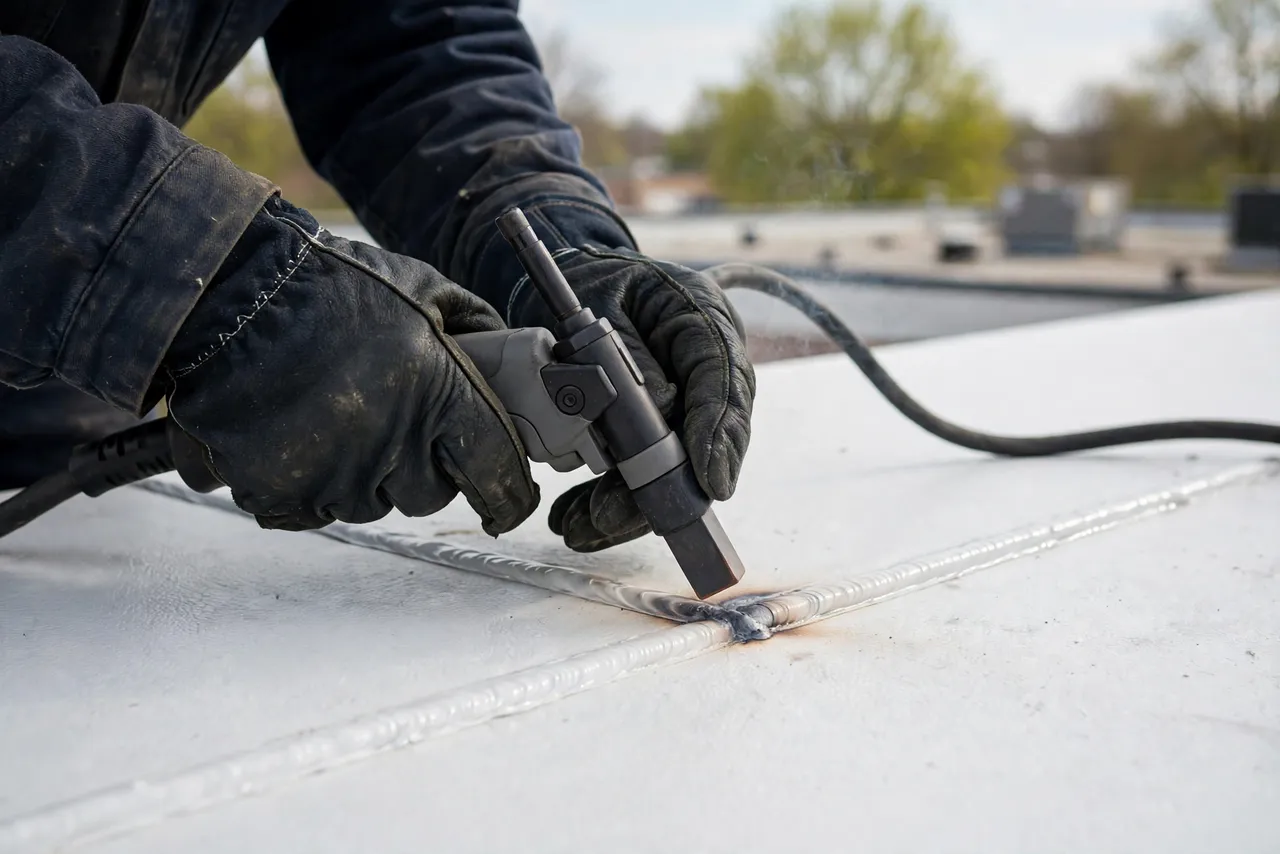
Flashing failureFailing flashing at curbs and wallsFlashing failure is the leading cause of commercial leaks. Once water gets behind the termination, the deck and insulation soak and rot. We rebuild curb, wall, and penetration flashing with material matched to your membrane, then hose-test the repair before we leave. Most flashing repairs are done in a single visit.
Blocked drainsClogged gutters and drains backing upBlocked drainage sends water under the edge metal and into the building. It is the lowest-cost problem to prevent and one of the most expensive to ignore. We clear gutters, scuppers, and downspouts, flush the system, and correct pitch where it has failed. A maintenance plan keeps this from recurring every storm season.
Why Douglasville property owners call us first
Commercial roofing is bought on documentation as much as on membrane.
Leaks stopped at the source
A leak is traced to its source, whether membrane, seam, flashing, drain or penetration, before it is sealed, because water travels and a stain is rarely under the failure. The scope records the source found, not just the area sealed.
Systems matched to the building
Membrane, insulation, drainage and penetration work are matched to the building's traffic, HVAC layout and hold period, so a restaurant, a storage facility and a church do not get the same generic scope.
Work that passes inspection
Work is built to pass inspection under the 2024 IRC with Georgia amendments, effective 1 January 2026, and the adopted code plus the manufacturer's instructions for the address, with permit jurisdiction confirmed for the parcel before quoting.
Maintenance that buys years
Spring and fall maintenance, with drain and seam checks and a photo report, is what buys years on a commercial membrane. The maintenance history is part of the handover, so budgeting is based on condition, not on surprise leaks.
What you receive
A commercial file is built for facilities records and phased work.
Drainage and penetration survey
Drains, penetrations, access points, and phasing recorded first.
Phasing plan
Occupied areas, access routes, and schedule agreed before work starts.
Membrane and flashing spec
Membrane system, seam, and flashing detail in writing.
Flat roofs and steep roofs are different trades
Commercial buildings usually have low-slope decks, which need different materials and methods than shingle roofs.
Flat systems
Membrane roofs on low-slope decks
TPO membrane
EPDM membrane
Modified bitumen
Steep systems
Pitched roofs on shingles or metal
Architectural shingles
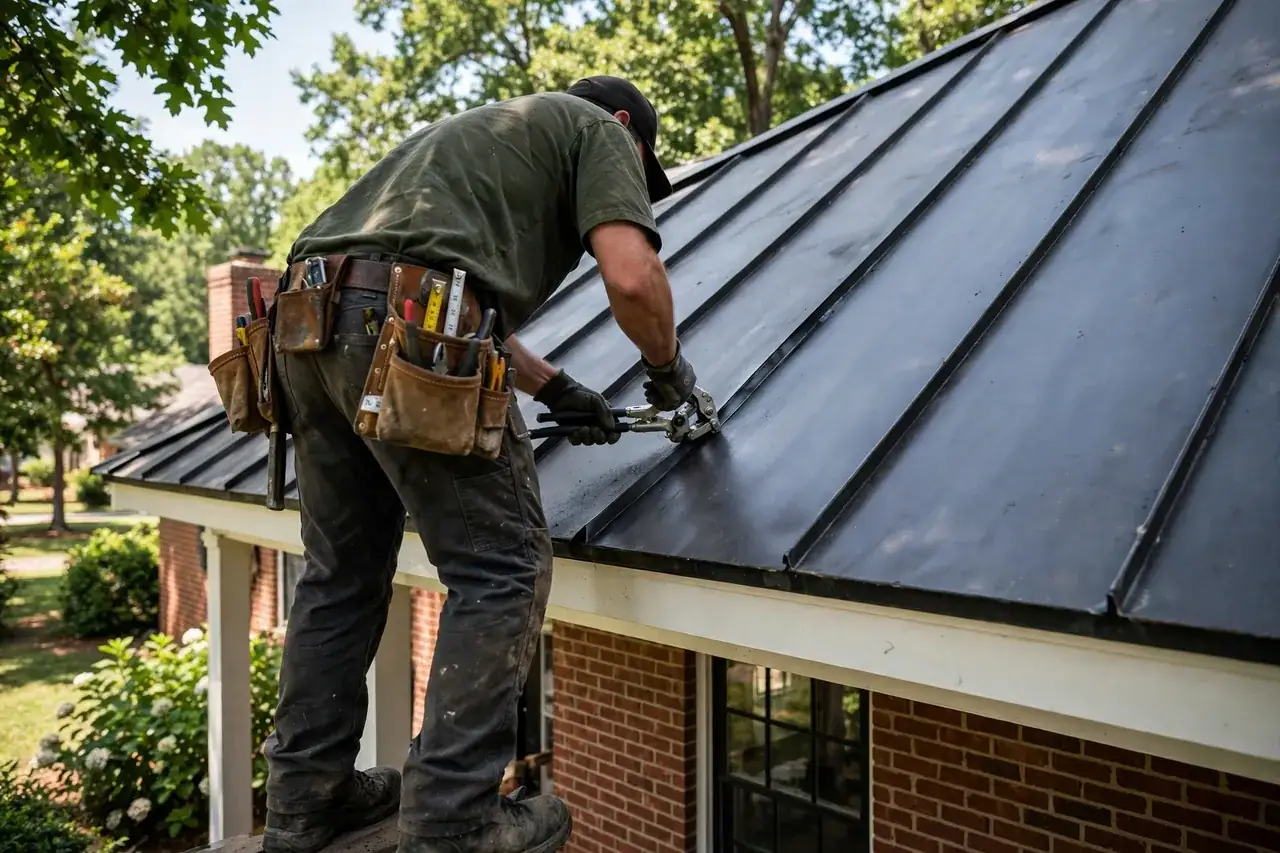
Standing seam metal
Clay and concrete tile
Details
The parts that stop leaks
Curb flashing
Drip edge
Ridge vent
Materials and systems we work with
TPO membrane
EPDM membrane
Modified bitumen
Standing seam metal
Architectural shingles
Roof flashing
Drip edge
Roof sealant
Service ZIP codes.
Commercial work is quoted across the Douglasville market, principally 30134 and 30135, with site access and phasing agreed per building.
They were very responsive and answered all my questions while making me feel at ease. I would highly recommend their services.
Questions we get on commercial roof calls
As Oct-2026 published market ranges only, not this business's firm prices: TPO $4–$12 per sq ft by measured roof area for low-slope systems, with totals varying sharply by building size, membrane, insulation and drainage corrections. Your written scope prices the system specified, not a generic commercial figure.
Service life depends on membrane, drainage, flashing upkeep and maintenance. A properly installed membrane with drainage corrected and spring and fall maintenance is the long-life case, while ponding and unmaintained seams shorten it, so the scope records the drainage and maintenance plan.
Yes, as a written maintenance programme with spring and fall visits, each including drain and gutter clearing, seam and flashing inspection, fastener checks and a photo report. The programme document, not a sales claim, defines what is included.
For most flat commercial buildings here, a 60-mil TPO membrane is the common choice on cost, reflectivity and hail resistance, with EPDM as a budget option on low-traffic roofs and standing-seam metal on pitched commercial roofs. The choice is scoped by traffic, penetrations, drainage and hold period.
Other roofing work we handle
Other services from the same team, each written from the same Douglasville research.
Get a Commercial Roofing Douglasville GA Written Scope
Call Finnegan Services LLC at +1 678-751-2052 for a commercial roofing scope in Douglasville, GA. The scope follows assessment and photos, priced by measured roof area. Hours: Monday–Friday 8:00 AM–5:00 PM; Saturday–Sunday closed. Finnegan Services LLC, 8635 Park St, Douglasville, GA 30134.
Call us at +1 678-751-2052 or send a message and we will get back to you the same business day. We answer the phone during working hours and return after-hours messages on the next business morning. Storm damage gets priority, so say so when you call.